FAQs
How was this location chosen?
Council engaged skate park experts, Convic, to help choose the best location for a new skate facility in the Northern Suburbs.
WF Jackson Park offers the most compelling case for a district-level skate park in the Northern Suburbs. Its central location in Thirroul, combined with high visibility along Lawrence Hargrave Drive, provides excellent natural surveillance which is critical for creating a safe and welcoming environment for women, families, and young people. The site’s proximity to Thirroul train station and bus routes ensures equitable access for a broad range of people and supports inclusive participation.
These attributes, coupled with its ability to accommodate a district level facility, make WF Jackson Park uniquely positioned to deliver a family and female-friendly, and safe skate park that meets community expectations.
What other locations were considered?
Thomas Gibson Park Tennis Courts, MacCauley Park in Thirroul, and Pinecourt Park in Austinmer were assessed but found unsuitable for a district-level skate park due to significant limitations.
Bulli Showground has also been ruled out, whilst investigation and planning works are underway by Transport for NSW for the proposed Bulli Bypass project that is situated adjacent to the Showground. Also, a skate facility placed within the Bulli Masterplan Study Area would have very poor passive surveillance.
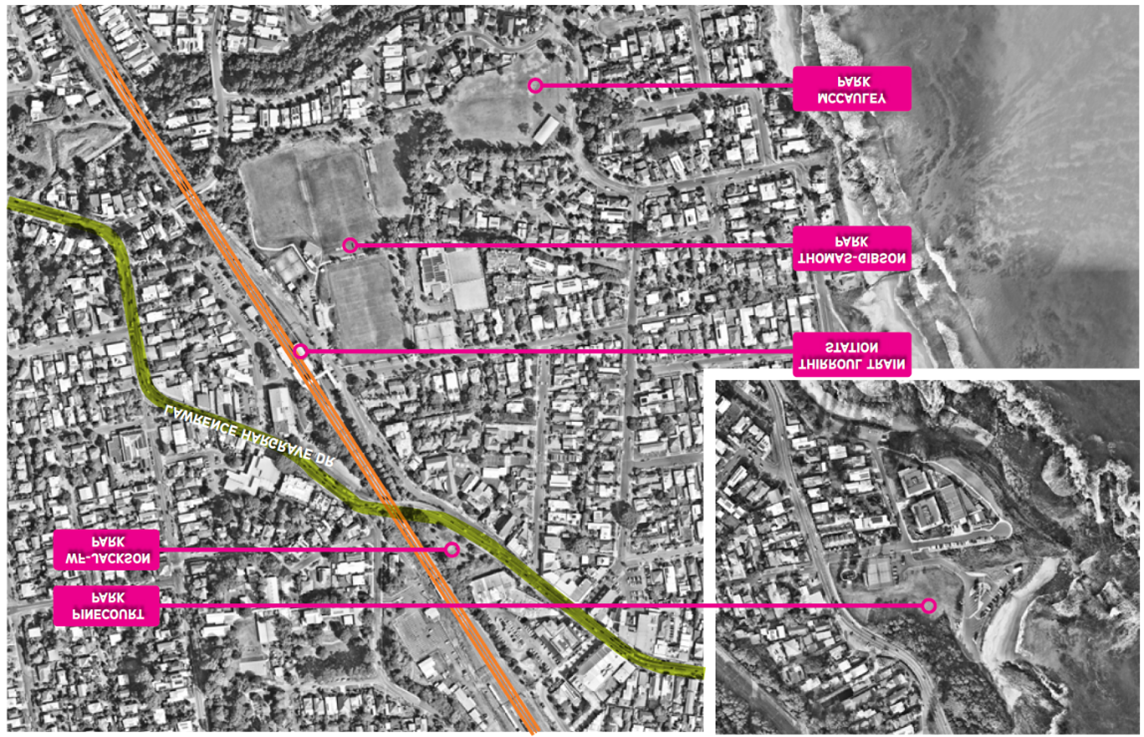
Thomas Gibson Park’s existing tennis infrastructure and constrained layout and size restrict opportunities for a district skate facility without displacing and impacting on current uses, including football, rugby league and tennis.
MacCauley Park, while located in Thirroul, lacks strong natural surveillance in addition to its proximity to residential properties which also raises noise and amenity concerns.
Pinecourt Park in Austinmer presents challenges with distance to nearest train station, approximately 1.5km, limited visibility at night, and proximity to existing residential homes.
Collectively, these factors make all three sites less viable compared to WF Jackson Park, which offers excellent accessibility, visibility, and capacity to deliver a safe, inclusive, and well-integrated skate park that would be designed to provide a unique skate experience to complement the space and community expectations.
You can read more about each of these sites and have a look at how they scored against the site assessment criteria in Convic’s Site Selection Report.
When will a skatepark get built here?
We’re committed to delivering a skate park for the Northern Suburbs. These plans and key actions are identified in Council’s Delivery Program 2025-2029 and Operational Plan 2025-2026 and remain a priority for us.
Finding the most suitable location is the first step to building the skatepark for the Northern Suburbs. Once a proposed location is endorsed, we’ll then begin to work on a concept design appropriate to the location, before taking this back to the community for feedback. We’ll finalise the plans and then be able to progress with procurement of a skate park contractor to prepare detailed designs and construct the new skate park.
Construction of a skatepark for the northern suburbs is scheduled to start in financial year 2026-27, as part of the Infrastructure Delivery Program.
The whole process may take a few years, but we want to make sure we’ve got it right.
How do I get involved in the design of the skatepark?
In 2024, we invited the skate community to share ideas and suggestions about what they wanted to see in skate park facilities across the city, including the Northern Suburbs. We heard what style and elements people wanted in new skate park facilities, as well as additional elements (such as lighting, amenity, seating, etc) that would make using or accessing the skate parks more enjoyable.
Once we have a location confirmed, we’ll use what we’ve heard already to develop an initial concept design. We’ll then check back with the community at this stage and invite feedback and suggestions on the design.
When we get to this point, there will be a few different ways to get involved such as completing an online survey, participating in a design workshop or having a chat with staff. All feedback will be considered, and where appropriate, incorporated into final design plans.
If you want to be involved, make sure you sign up to receive project updates and we’ll add you to the list.
How will you make sure these skateparks will be friendly and safe for women, girls and gender diverse people?
We’re committed to making the new skateparks safe, inclusive spaces where everyone feels welcome.
In 2024, we held several workshops with girls, women and gender diverse community members to understand what would make skate spaces feel safe, inclusive and enjoyable. We heard about the importance of inclusive skate elements and features, such as; good lighting, open and visible locations, a family and community friendly environment, access to water, seating and shade, regular maintenance, and ongoing community activity.
We’ve used everything we’ve previously heard to inform our site selection criteria and planning process to date. We’re now inviting more community feedback on the preferred locations and will continue to invite community input through the design phase.
Once the site is endorsed, we’ll be working with experts to ensure they feel safe and inclusive for women and gender diverse people in our community.
Everything we hear, especially ideas for creating a safe and inclusive skate facility, will continue to be considered in any design and future consultations.
I don’t skate, how will I be able to use the space if the skatepark gets built here?
We expect that a district level skate facility in this location will attract diverse members of the community who are interesting in supporting or watching skate activities or using the area as a social meeting point. It will create opportunities for the community to use WF Jackson Park in different and creative ways.
A skate park in this location is expected to be 600 –1000m2 to appropriately cater to the needs of the community. A skatepark at WF Jackson Park will still accommodate green space around the skatepark.
Who do we want to hear from?
This is a big and exciting project for not just Thirroul, but the whole of the Northern Suburbs. We know lots of people are interested in it and we’re really keen to hear from everyone.
As this will be a community facility, it’s really important that we hear from people who will use the space and skatepark in different ways. Your feedback will help us create a space that welcomes everybody and creates opportunities to use and enjoy the space in different ways.
We understand that sharing ideas or feedback isn’t always easy for everyone. In our previous skatepark consultations, we’ve made it a priority to hear from young people and women and girls. We’re keen to keep listening to our diverse community to ensure their voices help shape the next stages of this project.
How much will a skatepark impact the existing trees and plants?
We appreciate that the park has existing trees and shrubs that have been planted to improve the landscape and add to the amenity of the village.
The large trees in the park create an opportunity to tie a skatepark in with the existing natural shade. There is also potential to highlight and celebrate the large Moreton Bay Fig tree at the southern end of the site. However, it is acknowledged that that some of the existing trees, specifically the new central tree plantings would need to be removed to allow for a sufficient skatepark development area.
Council will offset any removal of mature trees by planting two trees for every one tree removed, in another location. Council will also consider landscaping and beautification as part future design of the park.
What is the History of WF Jackson Park?
The site is a former roads depot. Following growth of the area, the depot was moved to its current location in Bellambi.
The City of Greater Wollongong purchased the site in 1950 from the NSW Department of Main Roads utilising a grant of 1,460 pounds from the Joint Coal Board. The Joint Coal Board in its deliberation of this matter noted the site was “too valuable for a rest park but could be used for the erection of a community centre”.
Thirroul Library was subsequently opened in 1960, along with a Senior Citizens Centre, baby health centre and public toilets.
Aerial photos indicate that the large fig tree was planted sometime between 1961 and 1977, likely early 1970’s.
The library and community facilities were closed and demolished in 2010, following the opening of the new Thirroul District Library and Community Centre in 2009 (which is located approx. 230m south west).
Following demolition of the buildings, the site was beautified with planting of several trees and returfing.
Who was WF Jackson?
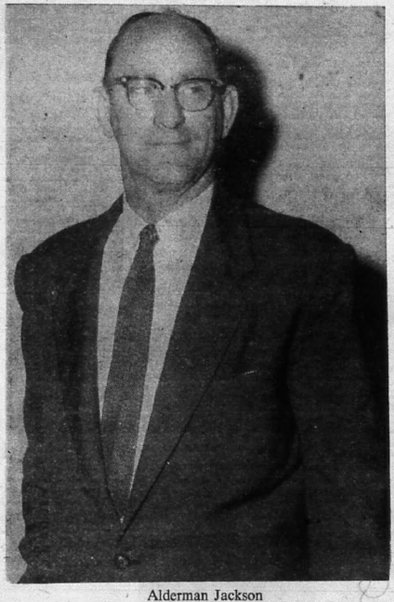
William Frank Jackson, or “WF” as he was known, was a passionate local resident who was committed to the advancement of Thirroul and its residents.
WF was contracted by the NSW Housing Commission to construct new houses in Thirroul. During the period between1948 and 1954 it is estimated that WF was responsible for building approximately 150 houses in the vicinity of the Thirroul town centre which has provided homes for generations of local families.
In 1950, he became a local Alderman where he championed reforms that resulted in a more equitable and sustainable property rating system, as well as advancement of recreational facilities. He was instrumental in the purchase of the subject site for the construction of the new library and baby health centre. In 1960, he officially opened the Thirroul Library where it stood for another 50 years.
Following his retirement from local politics, WF and his wife Eileen expanded their local business, Jacksons Hardware, located in Thirroul township where he continued to manage their business for over 30 years.
WF Jackson died in 1990 aged 82 and leaves a lasting legacy.