Help make our next Disability Inclusion Action Plan
This engagement has concluded
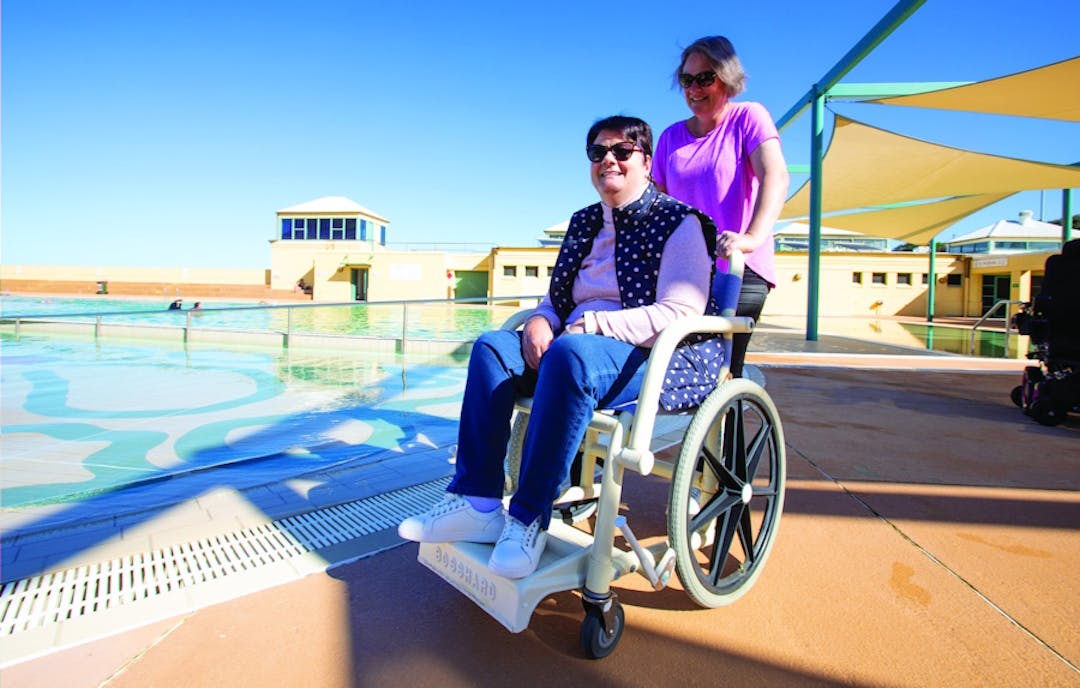
We’re making our next Disability Inclusion Action Plan and want to hear from people with disability, their families, carers, and support workers. Tell us your ideas about how Council can make our community a better place for you. These ideas will help us make our Plan.
We want to know what helps – and what is hard for people with disability. You could tell us about:
- Moving around your suburb and the places you visit.
- Going to parks, playgrounds, beaches or pools etc.
- Using Council services and going to events and activities.
- What makes you feel safe.
- What makes you feel part of our community.
- What is easy or hard about finding or keeping a job.
- Getting information in a way that is good for you.
There are lots of ways to share your ideas with us:
- Come to a workshop - fill in the online form or phone 4227 7111 to let us know you want to come.
- Talk to us at one of our pop-ups.
- Fill in an online survey or complete a printed copy at one of our Libraries (reply-paid envelopes available).
- Share your story or ideas online.
- Use a Community Circle Kit to hold your own group conversation and send us your group’s feedback.
- Email engagement@wollongong.nsw.gov.au.
- Call us on 4227 7111 to give your feedback to our Engagement Team.
- Write to: Engagement Team, Wollongong City Council, Locked Bag 8821 WOLLONGONG DC NSW 2500.
The final date to submit your feedback is Monday 15 September 2025.
Need help to join in?
We can provide:
- Easy Read materials.
- Auslan interpreters at workshops.
- Real-time transcription for the online workshop.
- A quiet space at events.
- Communication boards and sensory tools.
- Help filling in forms or sharing feedback in a way that works for you.
Call us on 4227 7111 if you need support to join in or send an email to engagement@wollongong.nsw.gov.au.
Accessibility and language support
If you’re d/Deaf, hard of hearing, or have a speech or language difficulty, you can contact us through the National Relay Service. If you need an interpreter, you can contact us through the Translating and Interpreting Service on 131 450. You’ll need to give our phone number 02 4227 7111 for either service.
Submissions become public documents and may be viewed by other persons on request. Please read Council’s Privacy Notification before submitting your feedback.
We’re making our next Disability Inclusion Action Plan and want to hear from people with disability, their families, carers, and support workers. Tell us your ideas about how Council can make our community a better place for you. These ideas will help us make our Plan.
We want to know what helps – and what is hard for people with disability. You could tell us about:
- Moving around your suburb and the places you visit.
- Going to parks, playgrounds, beaches or pools etc.
- Using Council services and going to events and activities.
- What makes you feel safe.
- What makes you feel part of our community.
- What is easy or hard about finding or keeping a job.
- Getting information in a way that is good for you.
There are lots of ways to share your ideas with us:
- Come to a workshop - fill in the online form or phone 4227 7111 to let us know you want to come.
- Talk to us at one of our pop-ups.
- Fill in an online survey or complete a printed copy at one of our Libraries (reply-paid envelopes available).
- Share your story or ideas online.
- Use a Community Circle Kit to hold your own group conversation and send us your group’s feedback.
- Email engagement@wollongong.nsw.gov.au.
- Call us on 4227 7111 to give your feedback to our Engagement Team.
- Write to: Engagement Team, Wollongong City Council, Locked Bag 8821 WOLLONGONG DC NSW 2500.
The final date to submit your feedback is Monday 15 September 2025.
Need help to join in?
We can provide:
- Easy Read materials.
- Auslan interpreters at workshops.
- Real-time transcription for the online workshop.
- A quiet space at events.
- Communication boards and sensory tools.
- Help filling in forms or sharing feedback in a way that works for you.
Call us on 4227 7111 if you need support to join in or send an email to engagement@wollongong.nsw.gov.au.
Accessibility and language support
If you’re d/Deaf, hard of hearing, or have a speech or language difficulty, you can contact us through the National Relay Service. If you need an interpreter, you can contact us through the Translating and Interpreting Service on 131 450. You’ll need to give our phone number 02 4227 7111 for either service.
Submissions become public documents and may be viewed by other persons on request. Please read Council’s Privacy Notification before submitting your feedback.
This engagement has concluded
-
Engagement Findings - Disability Inclusion Action Plan 2026–2030
Share Engagement Findings - Disability Inclusion Action Plan 2026–2030 on Facebook Share Engagement Findings - Disability Inclusion Action Plan 2026–2030 on Twitter Share Engagement Findings - Disability Inclusion Action Plan 2026–2030 on Linkedin Email Engagement Findings - Disability Inclusion Action Plan 2026–2030 linkThank you to all who took part in our engagement for the Disability Inclusion Action Plan 2026–2030. We received 240 submissions. These came from people with lived experience of disability, carers, families, support workers, service providers, and community members. Feedback included voices of children, young people, seniors, culturally and linguistically diverse communities, and LGBTQIA+ participants. We heard from people with non-visible, cognitive, intellectual, physical, sensory, and psychosocial disabilities. Your ideas and experiences have helped us understand what inclusion means in practice and what needs to change.
We’ve put together several reports and summaries so you can read what people told us:
- Full Engagement Report – 51 pages with all the details
- Engagement Snapshot – a short overview
- Easy Read Engagement Snapshot
- Plain Text and Large Font Engagement Snapshot
- Engagement Report for Children and Plain Text version
- Engagement Report for Young People and Plain Text version
You can access them all in the Document Library.
Here's a summary of what we heard:
Access to public spaces and facilities
Uneven footpaths, steep kerbs, missing ramps, and poor signage make it hard to get around. Accessible toilets, parking for wheelchair-accessible vans, and beach access are limited.
Community activities and social connection
Inclusive, affordable events and programs are valued. Cost, transport, and inaccessible venues are barriers. People want sensory-friendly programs and intergenerational activities.
Carers, families, and support networks
Carers described challenges balancing their own needs with the demands of caring for loved ones. They asked for more support, clearer information, accessible facilities, shaded seating, and inclusive programs. They want practical features like easy-to-find parking and safe drop-off zones to make going out less stressful.
Inclusive design and sensory needs
Quiet spaces, calm lighting, and reduced noise are important at libraries, playgrounds, and events. People value fenced playgrounds, shaded seating, and hoists in toilets. Crowded places, loud hand dryers, and unexpected noises or lights can make people feel uncomfortable.
Attitudes and respect
Disability awareness, patience, and respectful behaviour matter. People want Council staff trained in accessible communication and neurodiversity.
Information and communication
Easy Read, Auslan videos, captions, SMS alerts, large print, and plain English summaries are needed. Information needs to be available in multiple ways. People suggested we add QR codes on signs that link to videos or instructions and making an “accessible Wollongong” map.
Transport and mobility
People described buses that do not pull close to kerbs, limited services at night, difficulty recognising stops, and hazards created by cluttered footpaths. Some said costly taxi fares and long waiting times reduce their independence.
Employment and workplace inclusion
People shared their experiences of barriers in recruitment and career development in various workplaces, wanting more flexible options and practical assessments. They would like to see more representation in Council’s workforce. Young people need supports to help them move from school or training into employment.
Safety and independence
Lighting, safe crossings, and clear signage help people feel safe. Hazards from e-bikes and scooters were raised. People need privacy and dignity when using accessible toilets, pool hoists and change facilities.
Representation and trust
People want genuine co-design, transparency, and lived experience in decision-making. Trust is especially important for communities who have experienced exclusion or difficulty accessing services.
Engagement participation
1,032
Visits to the website
13
Printed surveys completed

56
Online surveys and stories completed

6
Emails received
196
Face-to-face conversations

76
Feedback from children and young people

240
Voices heard
Next stepsWe’re now using this feedback to write the draft Disability Inclusion Action Plan 2026-2030. It will include actions to make our community more accessible and inclusive. The draft will be ready early next year, and you’ll have the chance to read it and tell us what you think before it’s finalised. You will be able to see updates here and on our media channels as this project progresses.
Thank you again for sharing your ideas and helping shape the future of inclusion in Wollongong.
For any enquiries related to this project, please phone 02 4227 7111 or email council@wollongong.nsw.gov.au.
Thank you to all who took part in our engagement for the Disability Inclusion Action Plan 2026–2030. We received 240 submissions. These came from people with lived experience of disability, carers, families, support workers, service providers, and community members. Feedback included voices of children, young people, seniors, culturally and linguistically diverse communities, and LGBTQIA+ participants. We heard from people with non-visible, cognitive, intellectual, physical, sensory, and psychosocial disabilities. Your ideas and experiences have helped us understand what inclusion means in practice and what needs to change.
We’ve put together several reports and summaries so you can read what people told us:
- Full Engagement Report – 51 pages with all the details
- Engagement Snapshot – a short overview
- Easy Read Engagement Snapshot
- Plain Text and Large Font Engagement Snapshot
- Engagement Report for Children and Plain Text version
- Engagement Report for Young People and Plain Text version
You can access them all in the Document Library.
Here's a summary of what we heard:
Access to public spaces and facilities
Uneven footpaths, steep kerbs, missing ramps, and poor signage make it hard to get around. Accessible toilets, parking for wheelchair-accessible vans, and beach access are limited.
Community activities and social connection
Inclusive, affordable events and programs are valued. Cost, transport, and inaccessible venues are barriers. People want sensory-friendly programs and intergenerational activities.
Carers, families, and support networks
Carers described challenges balancing their own needs with the demands of caring for loved ones. They asked for more support, clearer information, accessible facilities, shaded seating, and inclusive programs. They want practical features like easy-to-find parking and safe drop-off zones to make going out less stressful.
Inclusive design and sensory needs
Quiet spaces, calm lighting, and reduced noise are important at libraries, playgrounds, and events. People value fenced playgrounds, shaded seating, and hoists in toilets. Crowded places, loud hand dryers, and unexpected noises or lights can make people feel uncomfortable.
Attitudes and respect
Disability awareness, patience, and respectful behaviour matter. People want Council staff trained in accessible communication and neurodiversity.
Information and communication
Easy Read, Auslan videos, captions, SMS alerts, large print, and plain English summaries are needed. Information needs to be available in multiple ways. People suggested we add QR codes on signs that link to videos or instructions and making an “accessible Wollongong” map.
Transport and mobility
People described buses that do not pull close to kerbs, limited services at night, difficulty recognising stops, and hazards created by cluttered footpaths. Some said costly taxi fares and long waiting times reduce their independence.
Employment and workplace inclusion
People shared their experiences of barriers in recruitment and career development in various workplaces, wanting more flexible options and practical assessments. They would like to see more representation in Council’s workforce. Young people need supports to help them move from school or training into employment.
Safety and independence
Lighting, safe crossings, and clear signage help people feel safe. Hazards from e-bikes and scooters were raised. People need privacy and dignity when using accessible toilets, pool hoists and change facilities.
Representation and trust
People want genuine co-design, transparency, and lived experience in decision-making. Trust is especially important for communities who have experienced exclusion or difficulty accessing services.
Engagement participation

1,032
Visits to the website
13
Printed surveys completed

56
Online surveys and stories completed
6
Emails received
196
Face-to-face conversations

76
Feedback from children and young people

240
Voices heard
Next stepsWe’re now using this feedback to write the draft Disability Inclusion Action Plan 2026-2030. It will include actions to make our community more accessible and inclusive. The draft will be ready early next year, and you’ll have the chance to read it and tell us what you think before it’s finalised. You will be able to see updates here and on our media channels as this project progresses.
Thank you again for sharing your ideas and helping shape the future of inclusion in Wollongong.
For any enquiries related to this project, please phone 02 4227 7111 or email council@wollongong.nsw.gov.au.
This engagement has concluded
Signup Banner
Key Dates
-
04 July 2025
-
08 July 2025
-
18 July 2025
-
22 July 2025
-
30 July 2025
-
31 July 2025
-
07 August 2025
-
12 August 2025
-
20 August 2025
-
27 August 2025
-
29 August 2025
-
15 September 2025
FAQs
- Why are we creating a new Disability Inclusion Action Plan?
- Is this Councils first Disability Inclusion Action Plan?
- What will the Plan do?
- Who does Council want to talk to about creating the next Disability Inclusion Action Plan?
- The words we use
- What will Council do with the information from the community?
Lifecycle
-
Open and listening
Help make our next Disability Inclusion Action Plan has finished this stageWe are at this stage now. You can give your feedback until Monday 15 September 2025.
-
Looking at what we heard
Help make our next Disability Inclusion Action Plan has finished this stageThis is the next stage. We will read and think about everything the community told us.
-
Sharing back
Help make our next Disability Inclusion Action Plan has finished this stageIn November 2025, we will tell you what we heard and what will happen next.
-
Writing the Plan
Help make our next Disability Inclusion Action Plan is currently at this stageWe will work with Council staff to write the new Disability Inclusion Action Plan using your feedback.
-
Check in with the community
this is an upcoming stage for Help make our next Disability Inclusion Action PlanIn the first half of 2026, we will share the draft Plan with the community.
We’ll check with everyone who gave feedback to make sure we got it right.
-
Council decision
this is an upcoming stage for Help make our next Disability Inclusion Action PlanIn mid-2026, Councillors will look at the draft Plan and decide whether to agree to it.
-
Starting the work
this is an upcoming stage for Help make our next Disability Inclusion Action PlanWe will begin working on the actions in the Plan from mid-2026.
Who's Listening
-
Engagement Officer
JLPhone 4227 7111 Email engagement@wollongong.nsw.gov.au -
Community and Cultural Planner
KG -
Coordinator Community Development + Planning
AR
Engagement Reports and Snapshots
-
Engagement Report - Disability Inclusion Action Plan 2026-2030.pdf (6.93 MB) (pdf)
-
Disability Inclusion Engagement Snapshot 2025.pdf (6.86 MB) (pdf)
-
Disability Inclusion Engagement Snapshot 2025 - Easy Read (41.7 MB) (docx)
-
Disability Inclusion Engagement Snapshot 2025 - Plain Text and Large Font (20 KB) (docx)
-
Disability Inclusion Engagement Report for Children 2025 (18.8 MB) (pdf)
-
Disability Inclusion Engagement Report for Children 2025 - Plain Text (17.6 KB) (docx)
-
Disability Inclusion Engagement Report for Young People - Disability Inclusion Action Plan 2026-2030.pdf (49.3 MB) (pdf)
-
Disability Inclusion Engagement Report for Young People - Disability Inclusion Action Plan 2026-2030 - Plain Text.docx (18.8 KB) (docx)